Local life · Waterloo, Ontario
Published
Blocked EV Chargers in Waterloo: Parking Rules and Practical Help
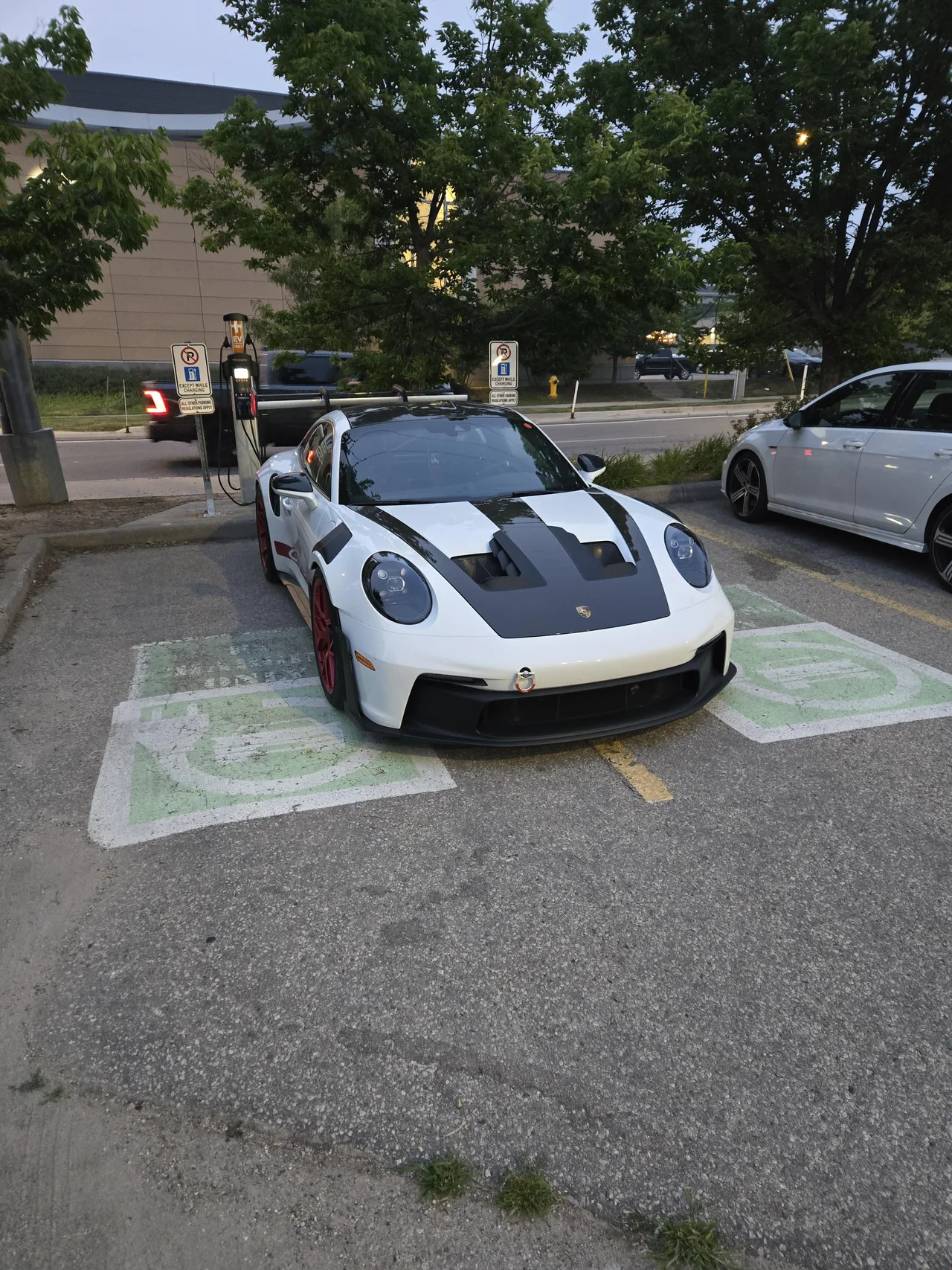
A photograph identified as Waterloo Town Square’s Erb and Caroline charging area showed a petrol car across two bays. For a current blocked charger, check the signs and contact the site operator or parking enforcement. Ontario distinguishes properly designated charging spaces from ordinary parking; owning an EV is not permission to occupy a charging bay without charging.
Facts checked
In this story
The space matters because the charger is there
An EV charging bay is not simply a convenient empty rectangle. It is parking attached to equipment a driver may need before the next part of a journey. Blocking it turns a functioning charger into an expensive ornament, while occupying two bays is a particularly ambitious way to share badly.
That is the practical issue behind a summer photograph of a petrol car spanning two charging spaces near Erb and Caroline. The driver’s motives, wealth and biography are unknown and unnecessary. A vehicle prevented access to equipment intended for another use. The same access problem can arise when an electric car remains in a charging space without charging.
For a driver arriving in November, the useful response is to read the signs, identify the operator and report the obstruction accurately. An old photograph does not establish today’s charger price, availability or the enforcement outcome. The article is about keeping charging usable, not replaying an unverified case against one person.
Source: Waterloo Town Square charging-bay parking dispute, summer 2026
Source: Ontario: designated electric-vehicle charging spaces and enforcement
Source: City of Waterloo: parking rules and complaints
Charging bays have a job beyond storing a car
A conventional empty space can be interchangeable with the next one. A charging bay is useful because the equipment is there. Blocking it can interrupt the stop another driver planned around, whether that stop is a quick errand or part of a longer journey.
Some contributors suggested the driver might have been avoiding door dents. Others thought that explanation only sharpened the objection: protecting one vehicle should not remove a service for everybody else. The useful counterpoint is that this also applies to electric cars. A charger is not a permanent reserved parking privilege attached to the vehicle’s battery.
Ontario’s charging-space provisions prohibit parking a non-electric vehicle in a space properly designated for charging by the required signs. They also address electric vehicles parked there without being connected to charging equipment. Signs and the actual site arrangements matter. A photograph and an angry caption are not a substitute for determining the applicable offence.
An older local charging argument, in July 2024, concerned a condominium price increase. Owners disagreed about how installation and maintenance should be shared and whether higher rates encouraged drivers to move along. Those private charges are not Town Square’s current rates. The recurring issue is how to keep useful equipment available while paying for it, rather than treating a charger as an ornament beside an ordinary parking space.
Source: Waterloo Town Square charging-bay parking dispute, summer 2026
Source: Ontario: designated electric-vehicle charging spaces and enforcement
Source: Condo charging-price and shared-cost debate, July 2024
Connection, time and site authority all matter
Ontario’s guidance distinguishes a designated charging space from an ordinary space beside equipment. Required signs and the applicable rules matter, as does whether an electric vehicle is connected. Drivers should read any time limit and charging conditions rather than assume ownership of a battery grants a standing parking entitlement. Once a session is finished, leaving the space available is part of using shared equipment considerately.
The reporting route also depends on the site. A municipal lot and private property do not necessarily give the same person authority to act. Waterloo’s enforcement service can take illegal or unsafe parking reports, while a private manager may need to address its own posted conditions. Provide the location, the bay and what is blocked. Do not promise yourself an immediate tow, and do not create another obstruction while waiting for the first to be dealt with.
Source: City of Waterloo: parking rules and complaints
Source: City of Waterloo: regulate parking bylaw
Source: Ontario: designated electric-vehicle charging spaces and enforcement
The calm response is the one that might free the space
The local argument quickly acquired suggestions involving damage, obstruction and improvised towing. None would make a useful public charging policy. Even contributors who initially entertained retaliation returned to the simpler advice: report the parking and let the responsible operator or enforcement staff deal with it.
Waterloo directs illegal or unsafe parking complaints to its reporting system or Municipal Enforcement at 519-747-8785. Private lots may also need the owner or manager to act under their posted conditions. Give an accurate location and describe the blocked equipment. Do not assume an officer can or will immediately tow a particular car; site authority, signs and circumstances affect the response.
The City’s parking rules also require vehicles to stay within marked spaces where those rules apply. Charging users should read time limits, rates and connection requirements at the actual station. The summer image does not establish November prices, equipment availability or the outcome of that individual incident.
For an EV driver, checking an alternative charger before the battery becomes urgent is sensible. It should not be necessary because somebody has decided their paintwork needs a private courtyard. The strongest response remains the least theatrical: a clear report, the proper authority and two charging bays returned to the job they were built to do.
Source: City of Waterloo: parking rules and complaints
Source: City of Waterloo: regulate parking bylaw
Source: Waterloo Town Square charging-bay parking dispute, summer 2026
Source: Ontario: designated electric-vehicle charging spaces and enforcement
Source: Waterloo Town Square charging-bay parking dispute, summer 2026
Questions people ask
Can a petrol car park in an Ontario charging-only space?
Not when the space is properly designated with the required charging signs under the provincial provisions.
Source: Ontario: designated electric-vehicle charging spaces and enforcement
Can an EV occupy a charging bay without connecting?
The provincial provisions also prohibit an EV occupying a designated charging space without being connected to its charging equipment.
Source: Ontario: designated electric-vehicle charging spaces and enforcement
Does every parking space near a charger have identical rules?
No. Read the designation, posted signs and site conditions.
Source: Ontario: designated electric-vehicle charging spaces and enforcement
Should an electric car stay in a charging bay after charging has finished?
Read the station’s connection and time-limit rules, and move when your permitted use is finished. A charging space serves the equipment; it is not a permanent parking privilege for every EV.
Source: Ontario: designated electric-vehicle charging spaces and enforcement
Who takes Waterloo parking complaints?
Use the City’s reporting system or call Municipal Enforcement at 519-747-8785.
Source: City of Waterloo: parking rules and complaints
Should I contact a private lot’s manager?
Yes, where applicable. Private-lot enforcement can depend on the owner and posted conditions.
Source: City of Waterloo: parking rules and complaints
Can I tow or move the blocking car myself?
Do not improvise a removal. Contact the site operator or proper enforcement authority.
Source: City of Waterloo: parking rules and complaints
Must cars fit within marked parking spaces?
Waterloo’s parking bylaw includes marked-space requirements where applicable.
Source: City of Waterloo: regulate parking bylaw
What should I include in a blocked-charger report?
Give the exact location and explain which charging equipment is blocked, following the reporting system’s instructions.
Source: City of Waterloo: parking rules and complaints
Where should I check a charger’s current rate and time limit?
Read the signs and operator information at the actual station. Prices, session limits and connection conditions can differ between sites.
Something changed? Tell us about a correction.